
Children's House
The Montessori methodology recognizes that human beings develop different structures throughout their lives and, as a result, have different ways of learning depending on the stage they are in.
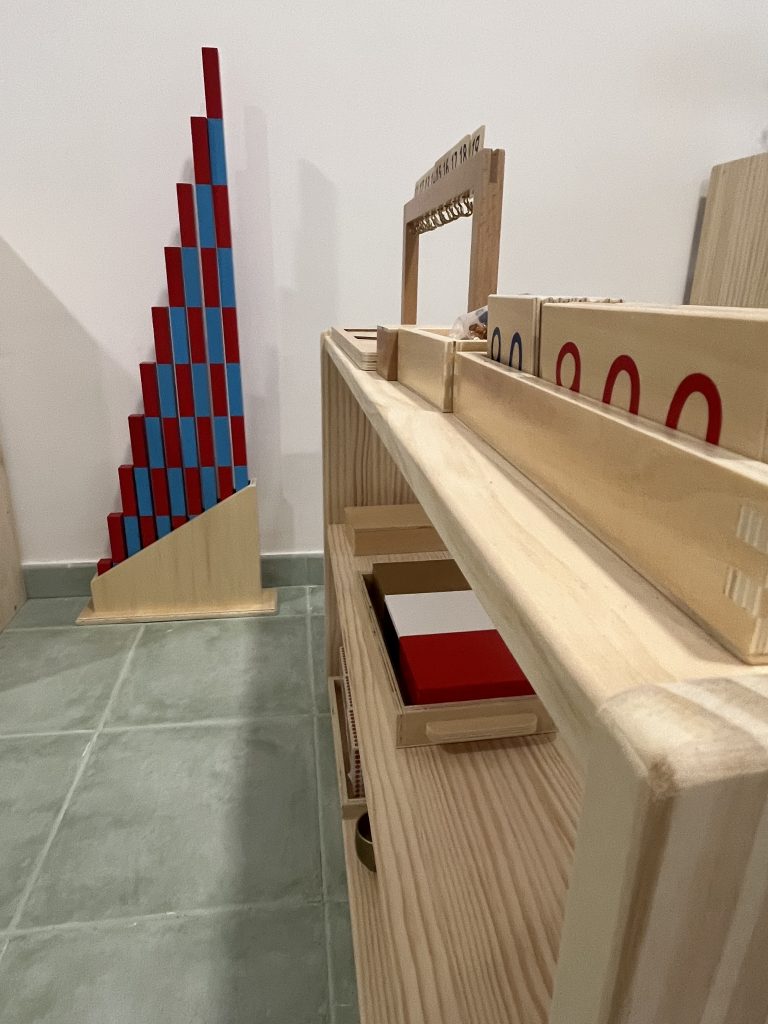
From 2.5 to 6 years old, children learn through their senses, engaging in hands-on exploration and direct experimentation with their environment. For this reason, María Montessori designed a series of sensory materials that, when presented in a prepared environment, allow children to develop their own learning experiences.
They have access to all materials and can move freely and respectfully within the environment to choose their work. Additionally, they can repeat activities as many times as needed, as a child’s desire to repeat an action indicates the development of a new skill or learning experience.
A prepared environment is designed with careful attention to detail, ensuring that children feel comfortable, secure, and motivated to explore and learn independently. comfortable, safe, focused, confident in making decisions, and happy.
Learning Areas
In the Montessori methodology, the goal of dividing learning into different areas is to provide children with a well-rounded and balanced education that nurtures various aspects of their development. María Montessori identified several key learning areas that are essential for children’s holistic growth. These areas include:
- Practical Life: This area focuses on developing practical skills and independence in children. Through everyday activities such as personal care, handling utensils, and caring for the environment, children learn skills that enable them to become self-sufficient and autonomous.
- Sensorial: Exploration and development of the senses are fundamental in the Montessori approach. The specially designed sensory materials spark curiosity and allow children to develop their sensory perception, discrimination, and refinement of the senses.
- Language: Language acquisition is an essential part of children’s development. The Montessori approach encourages language development through oral, auditory, and writing activities. Specific materials and techniques are used to help children learn letters, sounds, vocabulary, and grammar in a progressive and natural way.
- Mathematics: Mathematics learning in the Montessori methodology is based on the use of manipulative materials that allow children to understand abstract concepts in a concrete way. Children explore and experiment with numbers, operations, and fundamental mathematical concepts.
By addressing different aspects of development, children have the opportunity to explore, discover, and build knowledge in a meaningful and personalized way. This allows them to develop cognitive, social, emotional, and physical skills in a harmonious and holistic manner.
 English
  Spanish