
Elementary
The Primary Education stage under the Montessori philosophy is known as the Workshop and is considered a single environment, which can be divided into two: Workshop 1 for children between 6 and 9 years old, and Workshop 2 for those between 9 and 12 years old. The age mix provides an opportunity for children to learn from each other, fostering mutual support to tackle different challenges.
Certain conditions are needed for the development of the key qualities that characterize this period, including abstraction, reasoning, imagination, and moral intelligence. When this balance is achieved, the child’s cosmic consciousness flourishes, and their motivation is heightened.
During this period, the child’s mind becomes more reasoning, and social interaction becomes especially important. Therefore, presentations and work are primarily carried out in small groups, allowing children to learn from one another. Daily life and knowledge acquisition should be based on questioning everything around us, and therefore, on seeking one’s own answers, always guided and supported by the teacher.
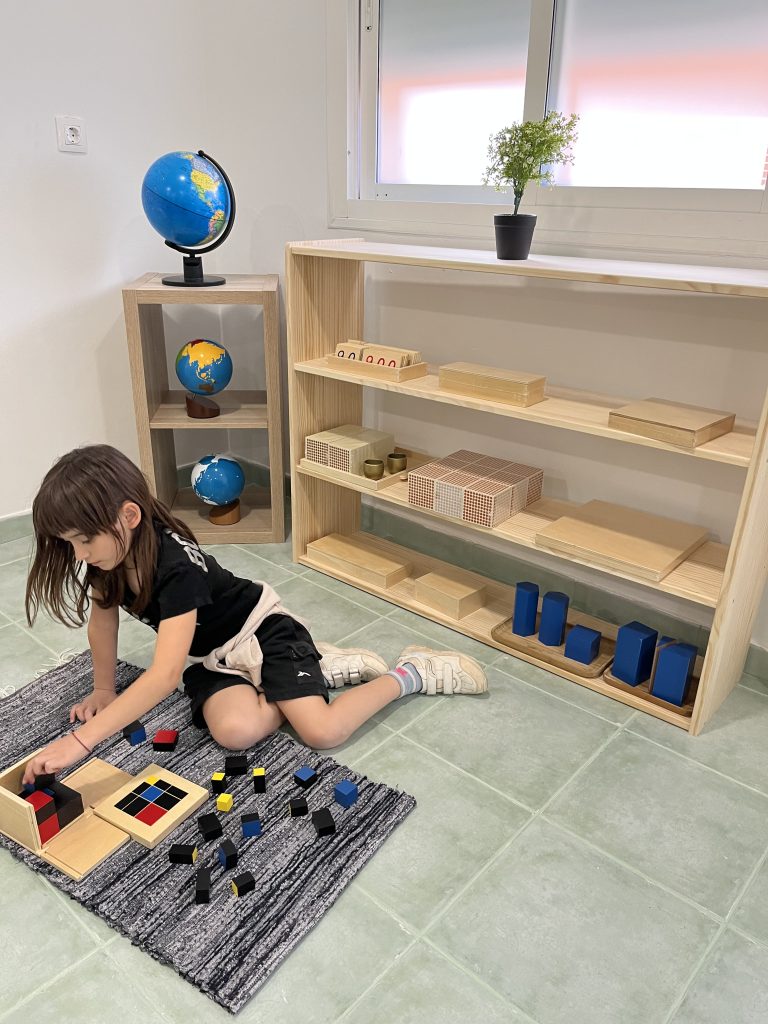
In the Montessori cycle, which lasts approximately 3 hours, areas such as Science, Social Studies, Mathematics, and Language are worked on through concrete materials that are readily accessible, allowing for great autonomy and freedom. The cycle is complemented by activities such as Art, Music, and Physical Education.
These subjects are not listed separately in the class schedule, as the time allocated to each is adjusted based on their complexity at any given moment.
An important pillar for us is education for peace, which is why we allocate daily time for a group assembly where each student shares their experiences and conflict resolution is encouraged. In this way, participants express, argue, and debate, reaching agreements and boundaries based on respect and tolerance, fostering healthy coexistence among children, families, and teachers.
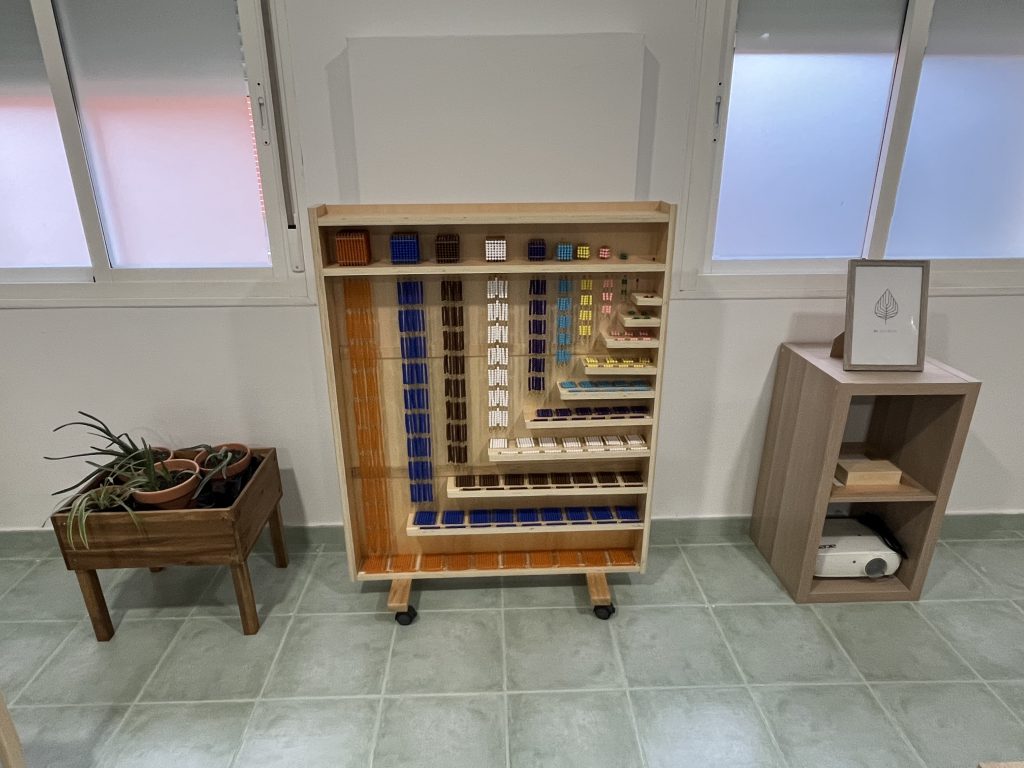
According to the Montessori educational model, the pace of each child’s learning in different areas of the curriculum comes from the child themselves, driven by their motivation and needs. Teachers foster this motivation with a prepared environment, rich in materials and activities that cater to the child’s interests. This environment should contribute to creating a positive social atmosphere and follow the established Montessori sequences for each area. In this way, children move from one area to another, delving deeper into each concept to reach or exceed the academic levels set by educational authorities.
Due to this deep interest in the internal workings of all things in the universe, Cosmic Education is the response. María Montessori referred to this subject as encompassing all fields of science, including Geography, History, Botany, Zoology, Anatomy, and Ecology.
 English
  Spanish